
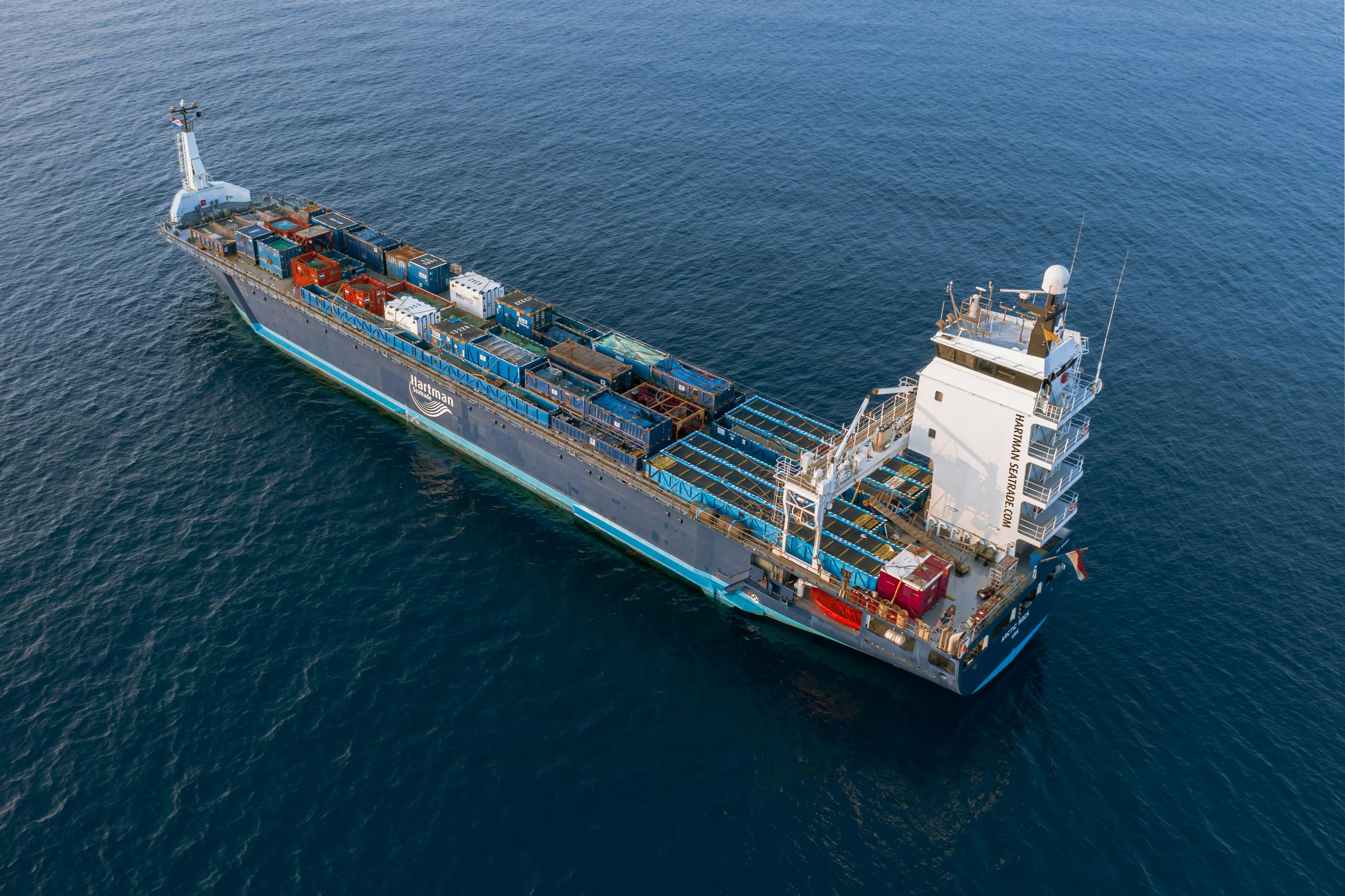
Maritime transport plays a vital role in connecting economies, linking communities, and utilising ocean resources. The industry is now poised for a major transformation, following the adoption of a global policy framework targeting net-zero emissions in international shipping by mid-century.
Cutting carbon emissions from shipping is one of the harder decarbonisation problems, but it offers significant advantages for nations and communities that move early. Achieving lower emissions will depend on innovative technologies, inventive business models, and robust regulations at every level of governance.
Decarbonising a Complex Sector
The maritime sector encompasses a wide variety of vessels: city ferries and large container ships, fishing boats and offshore service vessels. Each segment faces unique business drivers, challenges, and decarbonisation opportunities. There is no single lever.
Long-haul cargo shipping consumes enormous energy for ocean crossings, making the shift to sustainable fuels essential for net zero. Alternative fuels such as bio-methanol and e-ammonia remain expensive today, but those additional costs are modest compared to the high value of transported goods, a dynamic that enables new commercial arrangements distributing fuel costs across the supply chain.
Battery power is increasingly viable for local and short-distance ferries, port vessels, workboats, pleasure craft, and certain cargo ships. Advances in energy storage and charging technology are enabling more and larger vessels to electrify, though reliable charging infrastructure and careful planning of onshore electrical systems remain prerequisites.
Definition What are alternative marine fuels? +
Alternative marine fuels (AMFs) are low- or zero-carbon replacements for conventional heavy fuel oil (HFO) and marine diesel. The main categories in active development are: bio-methanol (methanol produced from biomass); e-ammonia (ammonia synthesised using renewable electricity and green hydrogen); LNG (a bridge fuel, lower carbon but still fossil); and green hydrogen (electrolysis-derived H₂, either used directly or as a feedstock). Each involves trade-offs in energy density, safety, production cost, and infrastructure readiness. No single fuel is expected to dominate; the fleet will likely run on a mix depending on route, vessel type, and regional supply.
How Do We Source Sustainable Maritime Fuels?
There is not enough sustainable fuel production today to satisfy rising demand or achieve net-zero objectives. Developing this market requires specialised expertise, capital, and long-term commitment from both public and private actors. Accelerating production and supply of three categories is essential:
- Hydrogen fuels: produced via electrolysis using renewable electricity
- Biofuels: including bio-methanol, bio-LNG, and bio-diesel from sustainable feedstocks
- Fuels produced using Carbon Capture and Storage (CCS): bridging synthetic fuels using captured CO₂
Each presents distinct challenges around cost, production scale, and sustainability certification. Governments and markets must determine whether production should be local, national, or coordinated internationally, a decision with major implications for industrial policy and energy security.
Achieving meaningful progress in green shipping requires innovation across technology, business models, and regulatory frameworks. Initiatives like green shipping corridors provide real-world environments to test and scale these innovations.
Definition What are green shipping corridors? +
Green shipping corridors are designated maritime routes where governments, ports, shipping companies, and technology providers collaborate to reduce emissions from ships operating that route. By concentrating investment and regulatory support on specific corridors, they reduce the commercial risk for both shipowners and fuel suppliers, creating a viable market for zero-emission vessels before that market exists at scale. Corridors also serve as policy testing environments: lessons on fuel standards, port infrastructure, and pricing mechanisms developed on one corridor can inform broader regulation.
Supporting these efforts from concept to operation requires pre-feasibility and feasibility studies that evaluate zero-GHG fuel demand at ports, options for fuel production or import, and distribution frameworks. These studies combine technical, commercial, and policy expertise within a strategic plan. Early movers can bring broad benefits: sustainable fuel demand can drive industrial and energy strategies, attract investment in renewables and large-scale fuel production facilities, and accelerate local energy transition.
Change on Land: What Does the Future Hold for Ports?
Ports play a critical role in the net-zero transition, and port leaders are rethinking their place in a climate-resilient future. Ports are ideal sites for assembling offshore wind infrastructure and can evolve into green energy hubs: facilitating the import and export of sustainable fuels, the management of captured carbon, and the charging of low-carbon transport across land and sea.

Decarbonising a port also means reducing Scope 3 emissions, indirect greenhouse gases across the value chain, by supporting all stakeholders operating within port boundaries. That means addressing vessel emissions at berth, landside freight movements, cold-chain logistics, and the embodied carbon in port infrastructure itself.
Definition What are Scope 3 emissions in the port context? +
For a port operator, Scope 3 emissions are the indirect emissions from activities the port enables but does not directly control: ships arriving and departing, trucks and trains collecting cargo, cold-storage facilities run by tenants, construction supply chains, and the eventual end-of-life of port infrastructure. Ports that only measure Scope 1 and 2 (their own energy use) typically capture under 10% of their actual climate impact. A credible port decarbonisation strategy must address the full value chain, which requires engagement with shipping lines, logistics operators, and port city authorities simultaneously.
Given the industry's many uncertainties (fuel price trajectories, regulatory timelines, vessel replacement cycles), an integrated, long-term approach is essential. Investing in port cities also brings broad social and economic benefits: green job creation, cleaner local air quality, and resilience against the stranded-asset risks that come with delayed transition.
Ennacle works with port authorities, shipping operators and maritime investors across South Asia and the Indian Ocean region on decarbonisation strategy, sustainable fuel transition planning, and Scope 3 value-chain assessments.